How to optimize the procurement management process ? Sysaler
The procurement process is essential for acquiring goods and services in a structured and efficient way. To ensure success, organizations often follow a set of defined steps to streamline procurement, reduce costs, and maintain quality and compliance. Below are the 7 key steps to a successful procurement process:
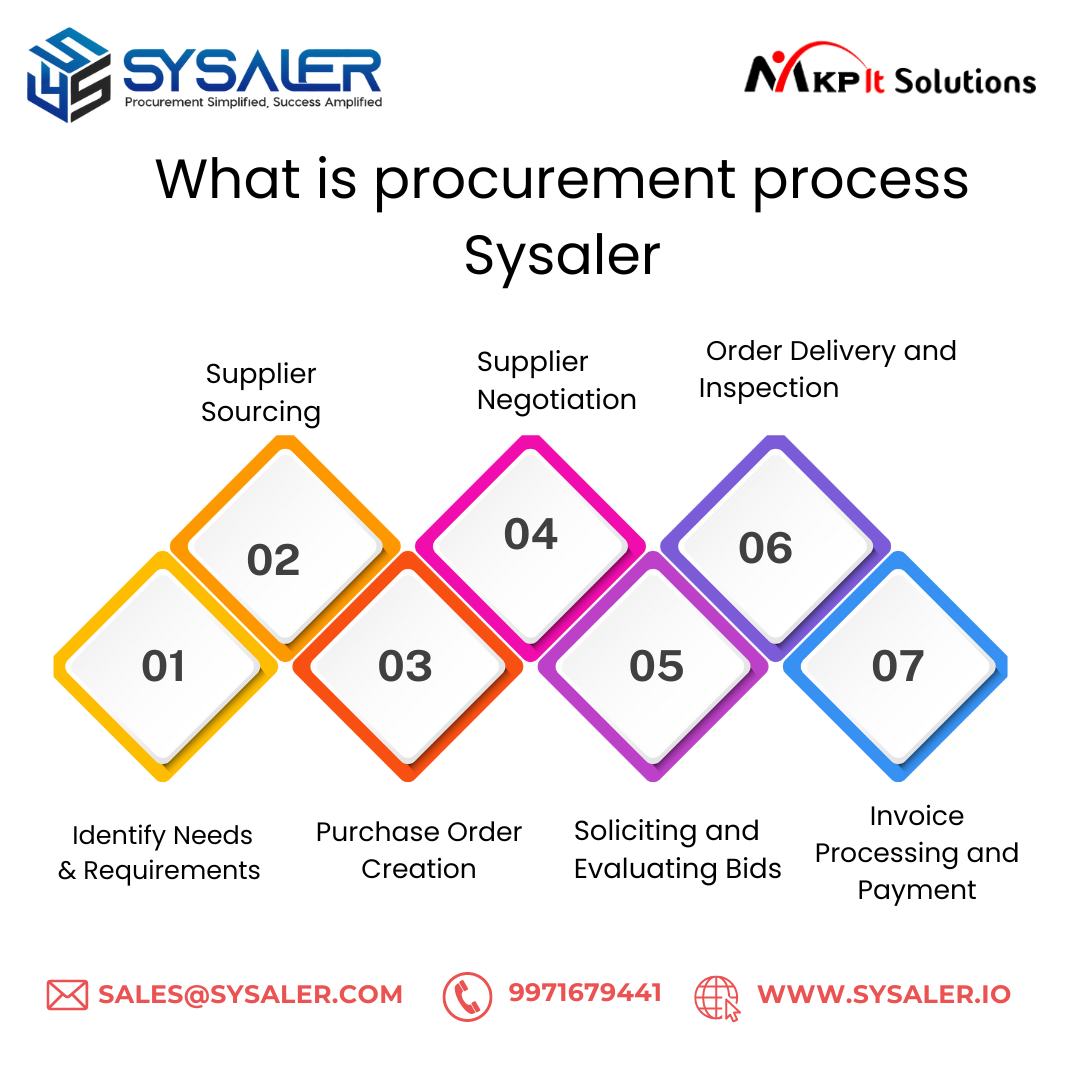
1. Identify Needs and Requirements
The first step in the procurement process is identifying the goods or services the organization needs. This involves working with internal stakeholders to define the specifications, quantity, and delivery timelines. Accurate identification helps avoid over-purchasing or under-purchasing and ensures the requirements are clear from the beginning
2. Supplier Sourcing
Once the needs are identified, the next step is to source potential suppliers who can meet the organization’s requirements. This step involves market research, creating a list of qualified suppliers, and inviting them to participate in the procurement process. Depending on the complexity and value of the procurement, this may include issuing a Request for Information (RFI), Request for Proposal (RFP), or Request for Quotation (RFQ).
3. Soliciting and Evaluating Bids
In this phase, suppliers submit their bids or proposals in response to the RFP/RFQ. The procurement team evaluates these bids based on factors such as price, quality, delivery timelines, and service capabilities. It’s important to use a standardized method for evaluating bids to ensure fairness and transparency
4. Supplier Negotiation
After selecting potential suppliers, the next step is to negotiate terms. This includes negotiating on price, payment terms, delivery schedules, warranties, service-level agreements (SLAs), and other contract terms. The objective is to create a win-win situation where both parties are satisfied with the agreement.
5. Purchase Order Creation
Once the negotiation is complete, the procurement team issues a purchase order (PO) to the chosen supplier. The PO is a formal document that details the goods or services to be delivered, the price, delivery dates, and any other relevant terms. This step formalizes the agreement and serves as a reference throughout the procurement process.
6. Order Delivery and Inspection
After the purchase order has been sent, the supplier delivers the goods or services according to the agreed terms. The procurement team (or the receiving department) inspects the delivered items to ensure they match the purchase order specifications, both in quality and quantity.
7. Invoice Processing and Payment
Once the goods or services are received and inspected, the supplier submits an invoice for payment. The procurement team reviews the invoice to ensure it matches the terms of the purchase order and delivery receipt. After verification, payment is processed according to the agreed payment terms.
Following these 7 steps ensures that the procurement process is efficient, transparent, and compliant with organizational policies. Each step builds on the previous one to ensure that goods and services are procured at the best value while maintaining quality and meeting delivery timelines. Successful procurement not only controls costs but also strengthens relationships with suppliers and enhances overall supply chain performance.
For More information visit our website www.sysaler.io
Contact Us- 9971679441

.jpg)
.jpg)
Comments
Post a Comment